

Advert
Why Your Allergy Medication Only Solves Half the Problem
You’re checking today’s pollen count right now. Which means you already know what’s coming: the sneezing, the itchy eyes, the foggy feeling that follows you through the day.
And you’ve probably already taken something for it.
But here’s the thing about antihistamines, nasal sprays, and eye drops: they manage your body’s reaction after pollen is already in your system. They don’t stop you from inhaling it in the first place.
That’s why on high-count days, even medicated, the symptoms still break through.
What If You Could Just… Breathe Less Pollen?
Think about it: if pollen triggers your symptoms when you inhale it, the most logical defense is reducing what reaches your nose and mouth — not just suppressing your body’s response after the fact.
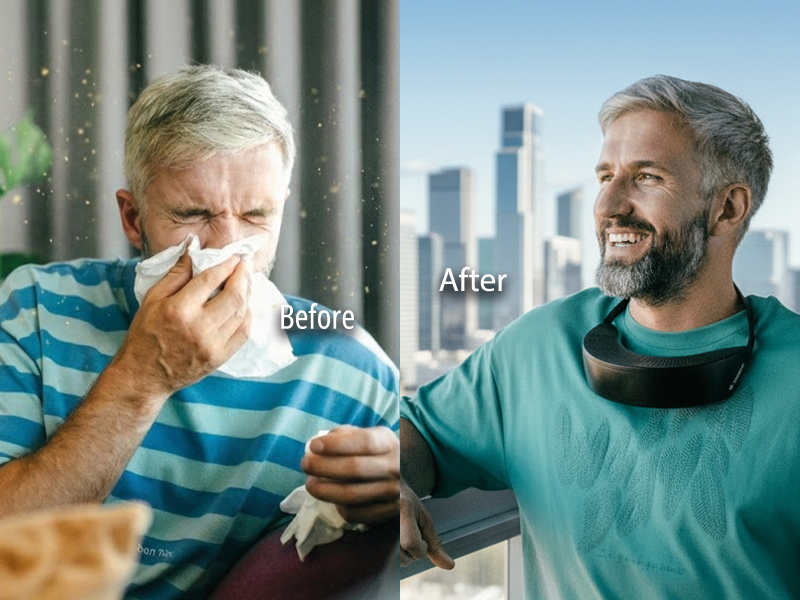
That’s exactly what the Respiray Wear A+ does. It’s a wearable air purifier that sits below your face and continuously filters the air you breathe through a medical-grade HEPA filter — capturing 99.9% of pollen particles before they reach you.
No mask. No face covering. No drowsiness. Just cleaner air, directed right where it matters.
Pills suppress your reaction. Wear A+ reduces the trigger itself. That’s not a replacement for your medication — it’s the missing layer that makes everything else work better.
Clinically Tested by Europe’s Leading Allergy Research Foundation
Wear A+ was clinically tested at the European Centre for Allergy Research Foundation (ECARF) in Berlin, Germany — one of the world’s most respected independent allergy research institutions.

“Our clinical trials showed that Respiray Wear A+ offers very high protection even on days with high pollen load in the air.”
— Dr. Prof Karl-Christian Bergmann, Chairman, European Centre for Allergy Research Foundation (ECARF)
In controlled exposure trials with real allergy sufferers:
ECARF concluded that Wear A+ can be recommended as a non-drug protection option for airborne allergies.
From Clinical Trial to Daily Use
Thousands of allergy sufferers already use Wear A+ daily — while walking the dog, commuting, gardening, visiting friends with pets, or just getting through a high-pollen day without reaching for extra medication.

✓ Drug-free. No side effects.
✓ No mask or face covering.
✓ Works the moment you turn it on.
✓ 60-day money-back guarantee.
Spring Allergy Season Is Here
Wear A+ is back in stock for the season. For Pollen.com readers, a Spring offer (save up to 40%) is available while current inventory lasts.
Your pills manage the reaction. Wear A+ reduces the cause.
Date Published: 3/30/2026 3:01:27 AM
Related Articles


Search Allergy Articles
UV Light Effective Against Indoor Allergens, Study Says
Peanut Allergy Risk Higher If Older Sibs Eat Peanuts, Study Finds
Advice In Teen TikTok Beauty Videos Can Lead To Skin Damage
How To Help Your Back-To-School Kid With Their Allergies
What to Know About Anaphylaxis: Symptoms, Triggers & Treatment
Smoking, Vaping Weed Increases Risk Of Asthma Attacks Among Young Adults, Study Finds
Night Shift Associated With Asthma Risk In Women
Wildfire Smoke Alters Immune System, Study Says
Holiday Tips To Keep Allergies and Asthma Under Control
Heavy 'Forever Chemical' Exposure Before Birth Increases Childhood Asthma Risk, Study Finds