
Advert
UV Light Effective Against Indoor Allergens, Study Says
TUESDAY, Sept. 30, 2025 (HealthDay News) — Ultraviolet light might be able to help people manage airborne allergens from sources like pets, dust mites, mold and greenery, a new study says.
UV light can alter the structure of allergens, making them less likely to be recognized by a person’s immune system, researchers report in the journal ACS ES&T Air.
The researchers liken the process to unfolding an origami animal.
“If your immune system is used to a swan and you unfold the protein so it no longer looks like a swan, you won’t mount an allergic response,” lead researcher Tess Eidem, a senior research associate at the University of Colorado-Boulder, said in a news release.
In a lab test, airborne allergen levels effectively decreased by about 20% to 25% on average after 30 minutes of UV light exposure, researchers said.
“Those are pretty rapid reductions when you compare them to months and months of cleaning, ripping up carpet and bathing your cat,” Eidem said.
Better still, the sort of UV lights used in the experiment — UV222 lights — are already commercially available, mostly for industrial antimicrobial uses, researchers noted.
These units are a less-intense alternative to the UV lights used to disinfect equipment in hospitals, researchers said. Users of those lights must wear protective equipment to protect their skin and eyes, but UV222 lights don’t penetrate deep into cells.
It’s feasible that companies could engineer a portable version that people can switch on when they visit a friend with a pet or clean out a dusty room, Eidem said.
“Asthma attacks kill about 10 people every day in the United States, and they are often triggered by airborne allergies,” Eidem said. “Trying to develop new ways to prevent that exposure is really important.”
It’s very difficult to completely rid a home environment of airborne allergens, researchers said.
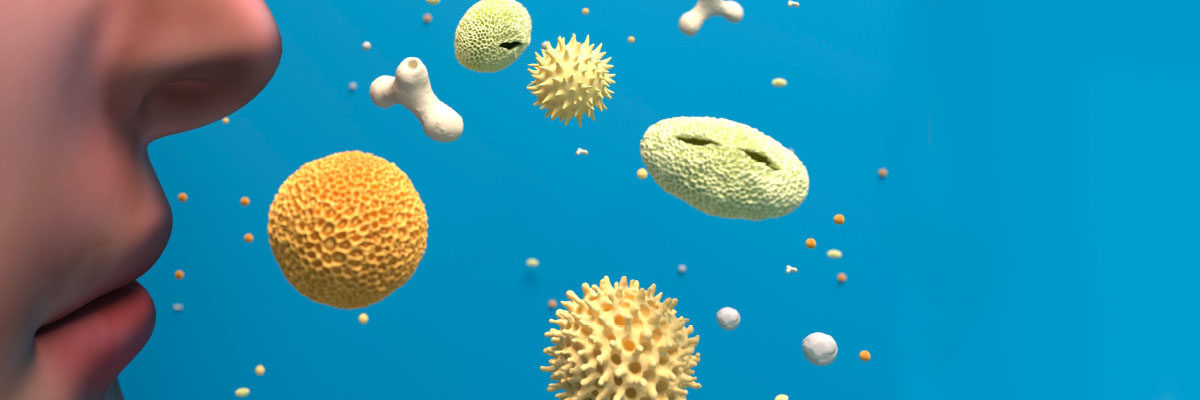
Pets, mice, dust mites, mold and plants all emit flecks of protein that hang out in the air and on surfaces and can trigger an allergic reaction.
Because these proteins were never alive, they can’t be killed off like viruses or bacteria, researchers said.
However, the immune system reacts to the allergens based on their unique 3D structure, opening the door for a different way to disable their effect on the body.
That’s why researchers looked into UV light as a way to manage indoor allergens, by changing their structure.
“We have found that we can use a passive, generally safe ultraviolet light treatment to quickly inactivate airborne allergens,” Eidem said.
“We believe this could be another tool for helping people fight allergens in their home, schools or other places where allergens accumulate indoors,” she concluded.
More information
The American Academy of Allergy, Asthma & Immunology has more on indoor allergens.
SOURCE: University of Colorado-Boulder, news release, Sept. 22, 2025
Date Published: 9/30/2025 6:05:02 AM
Related Articles
Search Allergy Articles
Yes, This is the Worst Pollen Season Ever — Until Next Year
Tick-Borne Meat Allergy: Many Carry Alpha-Gal Antibodies Without Symptoms
UV Light Effective Against Indoor Allergens, Study Says
Peanut Allergy Risk Higher If Older Sibs Eat Peanuts, Study Finds
GLP-1 Drugs Help Quell Asthma Among Teens Who Are Overweight or Obese
Vitamins Might Be Key To Asthma Control In Children, Adults
Living With Cats Not Linked To Worse Asthma in Children
Smartphone App Uses Voice To Predict Asthma, COPD Flare-Ups
Heavy 'Forever Chemical' Exposure Before Birth Increases Childhood Asthma Risk, Study Finds
Holiday Flu Surge Drives Record Illness Across the United States
Pentagon Drops Flu Vaccine Requirement For U.S. Military
FDA Reverses Course, Approves First mRNA Flu Shot
They Spent Hours In A Room Full Of Flu Patients And Walked Out Healthy — Here's How
52 Kids Have Died From Flu So Far This Season as Child Hospitalizations Rise